
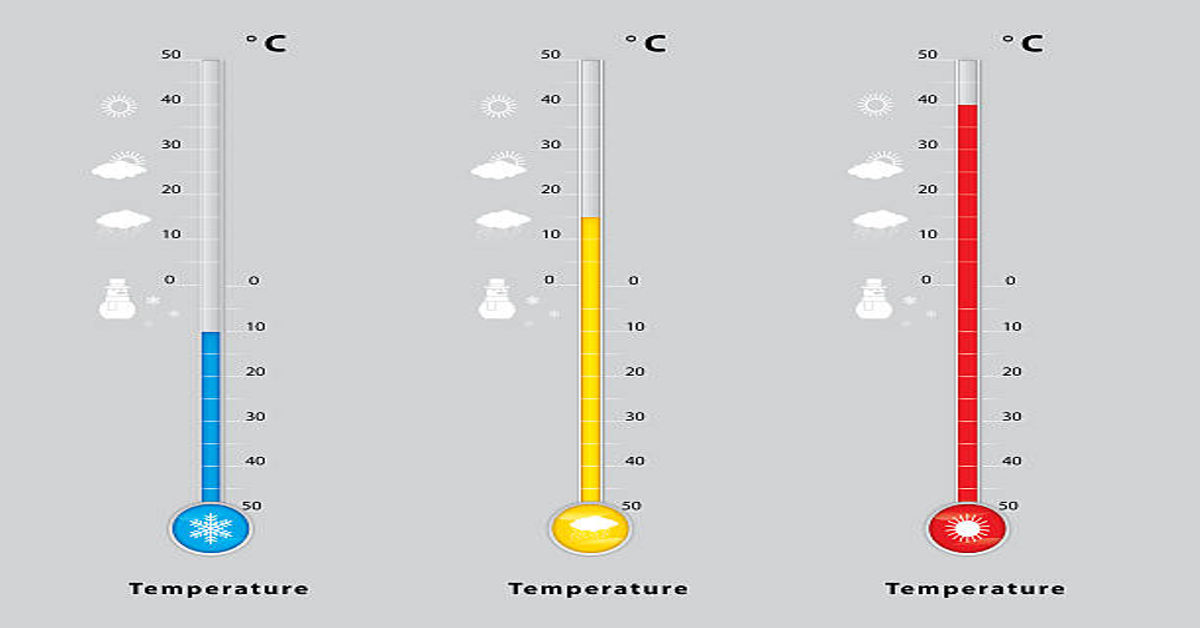
Temperature plays a fundamental role in daily life, science, health, weather forecasting, cooking, industry, and global communication. Among the most commonly used temperature scales in the world are Celsius and Fahrenheit. When people search for “40 Celsius to Fahrenheit,” they are often looking for more than just a numerical conversion. They want to understand what that temperature means in real life, how the conversion works, why different scales exist, and where such a temperature is commonly experienced. This article provides a deep, detailed, and clear explanation of converting 40 degrees Celsius to Fahrenheit, including the logic behind the formula, real-world relevance, historical background, scientific interpretation, and practical applications.
Understanding Temperature Scales
Temperature is a measure of how hot or cold something is, based on the average kinetic energy of particles within a substance. Over time, different temperature scales were developed to standardize measurements for scientific study, weather reporting, and daily use. The Celsius and Fahrenheit scales are two of the most widely used systems, each with its own reference points and historical context.
The Celsius scale is part of the metric system and is used by most countries worldwide. It is based on the freezing point of water at 0 degrees and the boiling point at 100 degrees under standard atmospheric pressure. This makes it intuitive and easy to apply in scientific and everyday contexts. Because of its simplicity and consistency, Celsius is commonly used in education, healthcare, weather forecasts, and scientific research.
The Fahrenheit scale, on the other hand, is primarily used in the United States and a few other regions. In this scale, water freezes at 32 degrees and boils at 212 degrees. The Fahrenheit system offers smaller degree increments, which some argue allows for more precise expression of everyday temperature changes, especially in weather reporting.
Understanding both scales and how to convert between them is essential in a globally connected world where information, travel, science, and communication cross national boundaries.
The Exact Conversion of 40 Celsius to Fahrenheit
The mathematical formula for converting Celsius to Fahrenheit is straightforward and consistent. The formula is:
Fahrenheit = (Celsius × 9/5) + 32
Applying this formula to 40 degrees Celsius allows us to calculate the equivalent Fahrenheit temperature step by step. First, multiply 40 by 9/5, which equals 72. Then, add 32 to 72, resulting in 104.
So, 40 degrees Celsius is equal to 104 degrees Fahrenheit.
This number alone, however, does not fully convey the significance of the temperature. To truly understand what 40 Celsius means, it is important to interpret it in real-world terms, compare it to other temperatures, and examine its effects on the human body, environment, and daily activities.
What 40 Celsius Feels Like in Real Life
A temperature of 40 degrees Celsius is considered extremely hot. In Fahrenheit terms, 104 degrees is well above what most people experience as comfortable. This level of heat is often associated with heatwaves, desert climates, or peak summer conditions in tropical and subtropical regions.
At 40 Celsius, outdoor exposure can become dangerous, especially for extended periods. The human body normally maintains an internal temperature close to 37 Celsius (98.6 Fahrenheit). When the surrounding temperature approaches or exceeds this level, the body struggles to cool itself effectively through sweating and heat dissipation. This increases the risk of heat exhaustion and heatstroke.
In everyday terms, 40 Celsius is the kind of temperature where asphalt can soften, metal surfaces become painfully hot to touch, and air conditioning becomes essential rather than optional. It is far beyond mild summer warmth and enters the category of extreme heat.
Scientific and Environmental Significance of 40 Celsius
From a scientific perspective, 40 Celsius is notable because it sits near critical thresholds for many biological and physical processes. Enzymatic reactions in the human body begin to lose efficiency at sustained high external temperatures. Prolonged exposure can disrupt hydration balance, cardiovascular function, and thermoregulation.
In environmental science, 40 Celsius is often used as a benchmark when discussing climate extremes. When weather forecasts predict temperatures approaching or exceeding this level, warnings are typically issued to protect vulnerable populations such as children, elderly individuals, and people with chronic illnesses.
In agriculture, temperatures around 40 Celsius can stress crops, reduce yields, and increase evaporation rates, leading to water shortages. Livestock may also experience heat stress, requiring additional cooling measures and water supply.
Why Celsius and Fahrenheit Give Different Numbers
One of the most common questions people have is why 40 Celsius translates to such a high number in Fahrenheit. The answer lies in the structure of the two scales. Celsius has a smaller numerical range between freezing and boiling points of water, while Fahrenheit spreads the same physical range across more degrees.
Because Fahrenheit uses smaller degree units, the numerical values are higher for the same physical temperature. This is why moderate temperatures appear larger in Fahrenheit and why extreme temperatures like 40 Celsius convert to a triple-digit Fahrenheit value.
Understanding this difference helps prevent confusion, especially when interpreting weather reports, medical information, or international data where one scale may be used instead of the other.
Practical Situations Where 40 Celsius to Fahrenheit Conversion Matters
Temperature conversion becomes important in many real-world situations. Travelers moving between countries that use different temperature scales need to understand local weather forecasts. A tourist accustomed to Celsius may underestimate the severity of a forecasted 104 Fahrenheit day if they do not realize it equals 40 Celsius.
In healthcare, temperature understanding is critical. A body temperature of 40 Celsius indicates a medical emergency, equivalent to 104 Fahrenheit, signaling severe fever or heatstroke. Medical professionals must be fluent in both scales to ensure accurate diagnosis and treatment.
In cooking and food safety, temperature awareness ensures proper storage and preparation. High ambient temperatures around 40 Celsius can accelerate food spoilage, making refrigeration and hygiene practices essential.
Industrial processes, scientific experiments, and engineering applications also rely on precise temperature conversions to maintain safety standards and operational efficiency.
Comparison Table for Better Understanding
| Celsius (°C) | Fahrenheit (°F) | Description |
|---|---|---|
| 0 | 32 | Freezing point of water |
| 20 | 68 | Comfortable room temperature |
| 30 | 86 | Hot summer day |
| 37 | 98.6 | Normal human body temperature |
| 40 | 104 | Extreme heat |
| 50 | 122 | Dangerous environmental heat |
| 100 | 212 | Boiling point of water |
This table shows how 40 Celsius fits within a broader temperature context, emphasizing its position as an extreme but not unprecedented level of heat.
Historical Background of Temperature Scales
The Celsius scale was introduced by Anders Celsius, a Swedish astronomer, in the 18th century. His system was initially inverted, with boiling at 0 and freezing at 100, but it was later reversed to its modern form for practicality.
The Fahrenheit scale was developed earlier by Daniel Gabriel Fahrenheit, a physicist who sought to create a more precise and repeatable temperature measurement system. His scale was based on a mixture of reference points, including the freezing point of saltwater and average human body temperature.
Despite their different origins, both scales remain relevant today. Celsius dominates scientific and international use, while Fahrenheit remains deeply embedded in everyday life in certain regions.
Psychological Perception of Heat at 40 Celsius
Human perception of temperature is influenced by humidity, wind, physical activity, and acclimatization. At 40 Celsius, heat feels significantly more intense in humid conditions because sweat evaporates more slowly, reducing the body’s ability to cool itself.
In dry climates, 40 Celsius may feel slightly more tolerable, though it is still extreme. Wind can provide some relief, while direct sunlight dramatically increases perceived heat. This is why weather reports often include “feels like” temperatures, which may exceed actual readings.
Understanding these factors helps individuals make safer decisions about outdoor activities, hydration, clothing, and shelter during periods of extreme heat.
Health Implications of Exposure to 40 Celsius
Prolonged exposure to temperatures around 40 Celsius can pose serious health risks. Dehydration occurs rapidly as the body loses fluids through sweat. Without adequate hydration, blood volume decreases, placing stress on the heart and circulatory system.
Heat exhaustion may develop, characterized by dizziness, nausea, weakness, and excessive sweating. If not addressed promptly, it can progress to heatstroke, a life-threatening condition where body temperature rises above safe limits and internal organs begin to fail.
Children, elderly individuals, and those with pre-existing medical conditions are particularly vulnerable. Public health guidelines emphasize limiting outdoor exposure, drinking water frequently, wearing light clothing, and seeking shade or air-conditioned environments during such temperatures.
Educational Importance of Temperature Conversion
Learning how to convert temperatures like 40 Celsius to Fahrenheit builds foundational numeracy and scientific literacy. It helps students understand proportional relationships, real-world applications of formulas, and global measurement systems.
In science education, temperature conversion is often one of the first examples used to demonstrate how mathematical formulas translate physical realities into numerical expressions. This knowledge also prepares students for advanced topics in physics, chemistry, biology, and environmental science.
Beyond academics, temperature conversion skills support practical decision-making in everyday life, from planning travel to understanding international news and medical information.
Technology and Temperature Measurement
Modern technology has simplified temperature conversion. Smartphones, digital thermometers, smart home systems, and weather apps automatically display temperatures in the user’s preferred scale. Despite this convenience, understanding the underlying conversion remains valuable.
Knowing that 40 Celsius equals 104 Fahrenheit allows individuals to quickly assess danger levels even without digital assistance. It also builds confidence when interpreting data from different sources or communicating across regions that use different measurement systems.
Frequently Asked Questions
What is 40 Celsius in Fahrenheit?
40 degrees Celsius is equal to 104 degrees Fahrenheit using the standard conversion formula.
Is 40 Celsius considered dangerous?
Yes, 40 Celsius is considered extreme heat and can be dangerous with prolonged exposure, especially without proper hydration and cooling.
Why does Fahrenheit use higher numbers than Celsius?
Fahrenheit divides the temperature range into smaller units, resulting in higher numerical values for the same physical temperature.
Is 40 Celsius a high body temperature?
Yes, a body temperature of 40 Celsius indicates a medical emergency and requires immediate attention.
Why is temperature conversion still important today?
Temperature conversion is essential for global communication, travel, healthcare, education, and understanding international weather and scientific data.
About the Author